Scott Kirby, CEO of United Airlines, has publicly confirmed what industry insiders have speculated about for months: he personally reached out to American Airlines to discuss a potential merger. In a candid interview, Kirby admitted, “I called Doug [Park, American’s CEO] and suggested we talk about combining.” The admission marks a significant moment in modern aviation history—one that could reshape the U.S. airline landscape if it ever moves beyond discussion.
This isn’t the first time consolidation has loomed over commercial aviation. The 2008–2013 era saw major mergers—Delta-Northwest, United-Continental, American-US Airways—all of which reduced the number of major carriers and increased market concentration. But unlike those deals, which were driven by bankruptcy or financial distress, this potential union would be proactive—engineered during a period of relative stability. That alone makes it a unique case study in strategic airline leadership.
Why United Wanted a Merger
United’s push for a merger with American isn’t about survival—it’s about scale and competitiveness. Kirby’s logic is straightforward: in a global aviation market dominated by massive international alliances and state-backed carriers, U.S. airlines are at a structural disadvantage. A combined United-American entity would instantly become the world’s largest airline by fleet size and available seat miles, surpassing even Delta and Emirates in network reach.
More importantly, the merger would strengthen U.S. positioning in key long-haul markets:
- Transatlantic dominance: United and American together operate over 120 daily flights across the Atlantic, far more than any other U.S. carrier.
- Asia-Pacific leverage: With hubs in Chicago, Houston, Dallas, Los Angeles, and San Francisco, the combined airline would have unmatched connectivity to Asia.
- Loyalty program scale: United’s MileagePlus and American’s AAdvantage are two of the most valuable airline loyalty programs. A merged program could rival credit card networks in revenue generation.
But scale isn’t just about size—it’s about cost control. Kirby reportedly saw synergies in procurement, maintenance, and administrative overhead. Analysts estimate potential cost savings of $2–3 billion annually, assuming 20–25% overlap in back-office functions and overlapping routes.
Why American Said No
Despite the strategic appeal, American Airlines declined to pursue talks. The official statement from CEO Doug Park emphasized “focus on execution and financial recovery” as the priority. But behind the diplomacy lies a deeper skepticism.
American is still navigating a complex post-pandemic recovery. It has underinvested in customer experience for years, and its fleet modernization lags behind United and Delta. A merger would have forced American to confront these issues under intense scrutiny—potentially exposing weaknesses that could weaken its bargaining position.
Additionally, antitrust concerns make any merger nearly impossible under current regulatory conditions. The Department of Justice (DOJ) has grown increasingly aggressive in blocking consolidation, especially in industries with high consumer impact. The airline sector, already criticized for poor service and rising fares, would be a red flag for regulators.
Past mergers succeeded because they eliminated redundant capacity and restored profitability after financial crises. Today’s market, while profitable, doesn’t offer the same justification. A DOJ challenge would almost certainly follow any formal merger filing.
The Antitrust Reality

There’s no sugarcoating it: a United-American merger would face a near-insurmountable legal hurdle. The U.S. airline industry is already an oligopoly, with four carriers—American, Delta, United, and Southwest—controlling over 80% of domestic capacity. Combining two of the “Big Three” would reduce that to three dominant players, raising prices and reducing competition, according to traditional economic models.
Federal regulators have made their stance clear. In 2023, the DOJ sued to block JetBlue’s Northeast Alliance with American, arguing it reduced competition on key routes. The fact that the alliance was non-ownership didn’t matter—the coordination was enough to trigger antitrust action.
A full merger would be a thousand times more aggressive. The DOJ would likely argue that:
- Over 300 domestic routes would become duopolies or monopolies.
- International routes, especially to Latin America and Europe, would lose competitive pricing pressure.
- Labor unions would face massive integration challenges, risking service disruptions.
Even if both airlines offered concessions—like divesting gates or slots at major airports—the DOJ would likely demand such extensive structural changes that the merger’s strategic value would disappear.
What This Means for Travelers
Consumers rarely benefit from reduced competition, and a United-American merger would be no exception—at least in the short term.
On the surface, travelers might welcome a unified frequent flyer program, broader route networks, and seamless connections. But history shows that post-merger integration takes years and often degrades service before improving it. United’s integration with Continental, for example, plagued customers with inconsistent branding, IT outages, and frequent flyer issues for nearly a decade.
Moreover, reduced competition means fewer incentives to improve service. With fewer alternatives, airlines can raise fares, reduce schedules, and cut amenities without losing market share. That’s already happening: average domestic airfares remain 20–25% above pre-pandemic levels, despite lower fuel costs.
A merged United-American could also accelerate the trend of shrinking domestic networks. Both airlines have quietly pulled back from smaller markets, focusing instead on hub profitability. A combined carrier might accelerate that trend, leaving rural and secondary cities with less or no service.
However, there’s one area where travelers could benefit: long-haul international service. A unified airline would have the scale to launch more nonstop routes to underserved destinations in Africa, South Asia, and Oceania. It could also invest more heavily in premium cabins and onboard experience, competing directly with Gulf carriers like Emirates and Qatar Airways.
The Bigger Picture: Airline Alliances Over Mergers
Given the regulatory impossibility of a merger, the future likely lies in deeper alliances—not ownership consolidation.
The Star Alliance (United’s network) and Oneworld (American’s network) already cover most of the globe. A strengthened commercial partnership between the two airlines—similar to the Delta-Air France-KLM joint venture—could deliver many of the same benefits without triggering antitrust alarms.
Possible collaboration areas include:
- Joint pricing and scheduling on transatlantic and transpacific routes.
- Shared lounges and staffing at international hubs.
- Interline baggage handling and through-ticketing.
- Loyalty program reciprocity, allowing easier point transfers and elite status recognition.
Such a model would let both airlines gain scale without ceding control. It’s also more palatable to regulators, as seen with the DOJ’s approval of United’s joint venture with Air Canada and Lufthansa.
Kirby’s merger overture may have failed, but it could push both airlines toward a new kind of partnership—one that delivers value without violating antitrust boundaries.
United’s Strategy Beyond the Merger
While the American merger didn’t materialize, United isn’t standing still. The airline is aggressively pursuing growth through other means:
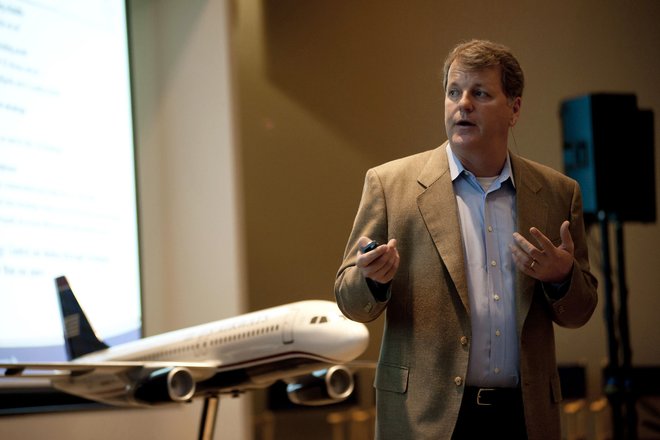
- Fleet renewal: United has ordered over 400 new aircraft from Boeing and Airbus, including fuel-efficient 787s and A321neos.
- Premium product investment: The airline is rolling out new Polaris business class suites and upgrading domestic first class.
- Sustainable aviation fuel (SAF): United is the largest investor in SAF startups, aiming for 100% net-zero emissions by 2050.
- International expansion: United has added new routes to India, Africa, and Australia, targeting high-yield business and VFR (visiting friends and relatives) traffic.
These moves suggest that United sees its future not in domestic dominance, but in global connectivity. The American merger proposal may have been a bold gambit, but it wasn’t central to United’s long-term roadmap.
What Other Airlines Are Doing
While United explored merger options, competitors pursued different strategies:
- Delta Air Lines focused on operational reliability, earning top marks for on-time performance and customer satisfaction.
- American Airlines invested in its AAdvantage program, launching co-branded credit cards and hotel partnerships.
- Southwest Airlines maintained its point-to-point model, avoiding hub congestion and keeping costs low.
- JetBlue and Spirit attempted a merger (later blocked), aiming to create a strong low-cost alternative.
Each approach reflects a different view of the future. United’s merger talk signals ambition for scale; Delta’s focus on execution reflects confidence in organic growth; Southwest’s model bets on agility over size.
There’s no single right path—but in a market where customer trust is fragile, operational consistency may matter more than corporate grandeur.
Closing: What Comes Next?
Scott Kirby’s acknowledgment that he approached American Airlines is less about a failed deal and more about a mindset: U.S. carriers need to think bigger to survive global competition. But the path forward isn’t through mergers—it’s through smarter partnerships, disciplined growth, and relentless customer focus.
For travelers, the takeaway is clear: expect more international routes and loyalty perks, but don’t count on lower fares or better domestic service. The airline industry is consolidating—not through ownership, but through influence.
The era of megamergers may be over. The era of strategic alignment has just begun.
Frequently Asked Questions
Did United and American Airlines officially start merger talks? No. United CEO Scott Kirby confirmed he approached American, but American declined to engage in formal discussions.
Would a United-American merger be legal? Almost certainly not under current antitrust enforcement. The Department of Justice would likely block it due to reduced competition.
How would a merger affect frequent flyers? In theory, a combined loyalty program could offer more redemption options. But integration would be complex and could devalue points temporarily.
What routes would be most affected by a merger? Transatlantic flights, major domestic business routes (e.g., New York–Los Angeles), and Latin America services would see the most overlap and potential cuts.
Could United try to merge with another airline? Unlikely. Delta is off the table due to rivalry and scale. Alaska or JetBlue are too small to move the needle. International mergers are restricted by law.
What did United gain from making the merger approach public? It signaled strategic ambition to investors and pressured American to improve its performance, even without a deal.
Is airline consolidation likely to continue in the U.S.? Not through mergers. But deeper alliances, joint ventures, and loyalty partnerships will continue to blur the lines between carriers.
FAQ
What should you look for in United Airlines CEO Confirms Merger Talks with American? Focus on relevance, practical value, and how well the solution matches real user intent.
Is United Airlines CEO Confirms Merger Talks with American suitable for beginners? That depends on the workflow, but a clear step-by-step approach usually makes it easier to start.
How do you compare options around United Airlines CEO Confirms Merger Talks with American? Compare features, trust signals, limitations, pricing, and ease of implementation.
What mistakes should you avoid? Avoid generic choices, weak validation, and decisions based only on marketing claims.
What is the next best step? Shortlist the most relevant options, validate them quickly, and refine from real-world results.