
The future of Virginia’s congressional representation hangs in the balance as the state’s Supreme Court weighs whether to block a voter-approved US House map that appears to benefit Democrats. What began as a grassroots effort to end partisan gerrymandering has turned into a legal and political flashpoint, with implications reaching far beyond state borders. This moment isn’t just about lines on a map—it’s about power, accountability, and who gets to define fairness in democracy.
A Voter-Backed Map Under Legal Siege
In a rare display of direct democracy, Virginia voters approved a constitutional amendment establishing an independent redistricting commission. The goal was clear: remove partisan influence from the redistricting process. But when the commission failed to agree on final maps, the responsibility shifted to the Virginia Supreme Court. The resulting map, drawn with input from special masters and ultimately adopted by voters, leaned Democratic—raising immediate objections from Republican lawmakers.
The current challenge stems from claims that the map violates the state constitution’s equal protection clause and dilutes rural voting power. Plaintiffs argue that population deviations between districts exceed constitutional tolerances, even if they fall within federal guidelines. These legal arguments are technical but carry immense political weight.
For example, District 7, anchored in central Virginia, includes a sprawling stretch from suburban Richmond to rural counties. Critics say this configuration packs Democratic-leaning urban voters while scattering conservative rural voters across multiple districts, weakening their collective influence. Proponents counter that the map reflects geographic realities and preserves communities of interest.
How Voter Approval Complicates the Legal Landscape
One of the most unusual aspects of this case is that the contested map received voter approval. In most states, redistricting is controlled by legislatures or commissions, but Virginia’s amendment granted voters the final say. This twist raises a thorny constitutional question: can a court invalidate a map endorsed directly by the electorate?
Historically, courts have intervened when maps clearly violate constitutional principles like “one person, one vote” or racial equity. But overturning a map approved in a statewide referendum is rare and politically fraught. It risks appearing undemocratic—judges overturning the will of the people.
Still, precedent exists. In 2022, the North Carolina Supreme Court initially struck down a Republican-drawn map, only for the state’s political shift to reverse that decision months later. Virginia’s case is different because it involves a court-drawn map ratified by voters, not one crafted by a partisan legislature. This nuance makes it a potential test case for how deeply courts should delve into maps with democratic legitimacy.
Political scientists note that while voter approval adds legitimacy, it doesn’t automatically shield a map from legal scrutiny. “Democracy isn’t just about majority rule,” said Dr. Elena Torres, a University of Richmond political analyst. “It’s also about structural fairness. If districts are malapportioned, even a popular map can undermine representation.”
Partisan Implications and Electoral Consequences
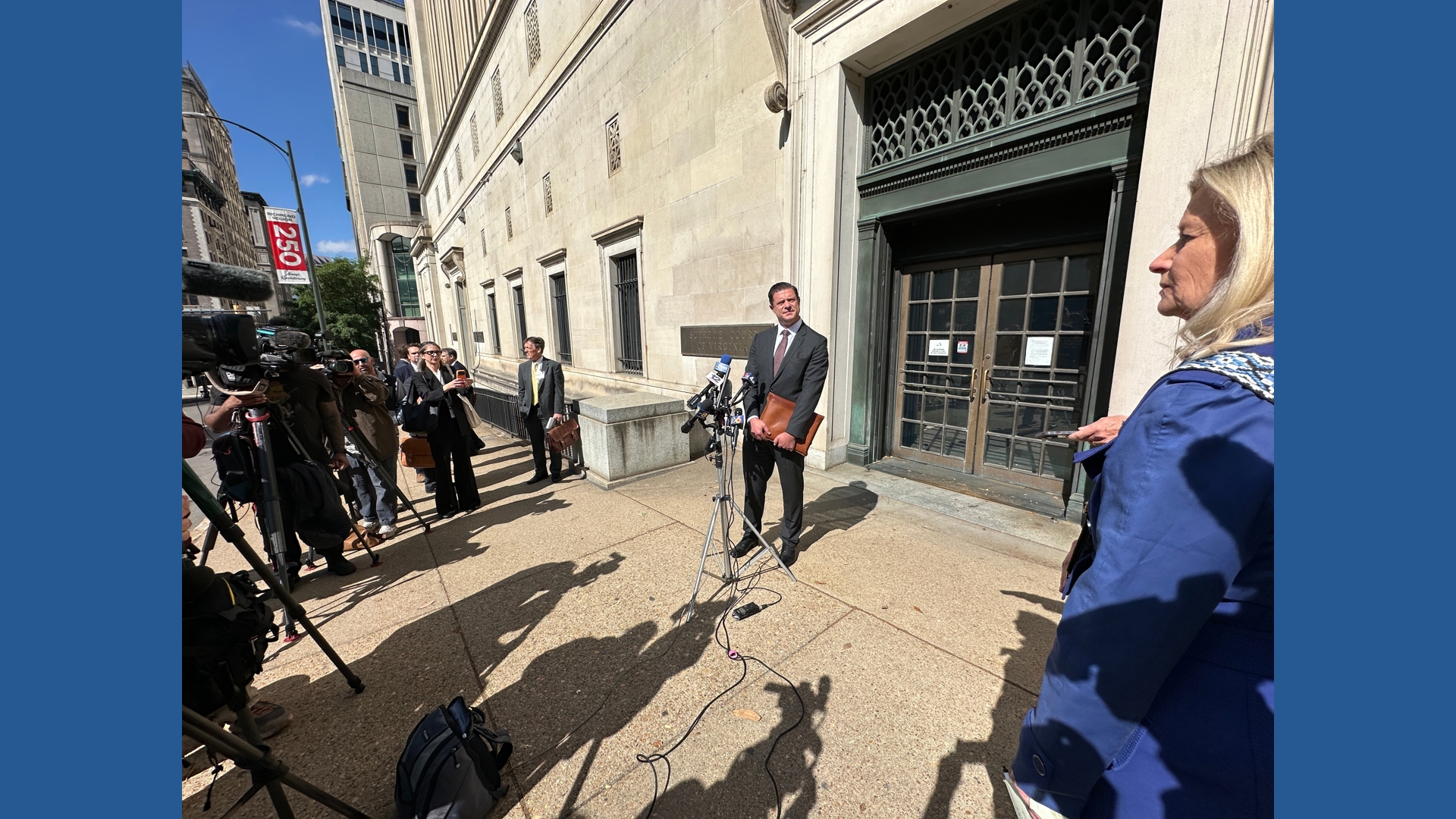
The practical impact of the map is clear: it gives Democrats a structural advantage in Virginia’s 11-member US House delegation. Under the current map, seven districts lean Democratic, four lean Republican. That’s a shift from the previous balance, which often resulted in a 6–5 split.
If the court blocks the map, the alternative isn’t immediately obvious. The commission is defunct. Reverting to older maps could trigger its own legal issues. A new special master process would delay elections and create confusion.
Consider the 2024 election cycle: candidates have already begun fundraising and organizing based on district boundaries. A last-minute change could invalidate filing decisions, upend campaign strategies, and disenfranchise voters who expect consistency.
Moreover, Virginia’s political landscape is changing. Suburban areas around Northern Virginia and Richmond have trended blue, while western and southern regions remain strongly conservative. The current map reflects this shift—but critics argue it exaggerates it through district shaping.
For instance, the 5th Congressional District extends nearly the entire length of the state, connecting Republican-leaning areas with little in common. Legal experts say such elongated districts can be evidence of manipulation, especially when they split cities or counties without clear justification.
The Role of Special Masters and Judicial Overreach When the Virginia Redistricting Commission deadlocked in 2021, the state Supreme Court appointed two special masters—retired judges with expertise in mapping and election law. They were tasked with drawing fair, constitutional districts. Their proposed map became the foundation of the voter-approved version.
Opponents now argue that the court overstepped by delegating such a politically sensitive task. “Judges aren’t elected to draw maps,” said Delegate John McGuire, a Republican leading the legal challenge. “This was a legislative function that the court effectively seized.”
But legal scholars point out that courts have long played a role in redistricting when political branches fail. The US Supreme Court’s 1964 decision in Reynolds v. Sims established that federal courts can intervene when legislatures violate the “one person, one vote” principle.
Virginia’s case tests whether a state court can not only intervene but also delegate the actual map-drawing to outside experts—and whether voters can then ratify that judicial product. If the court upholds the map, it sets a precedent for judicial-led redistricting backed by referendum. If it blocks the map, it may signal that only elected bodies—or commissions with legislative authority—can create lasting district lines.
Historical Context: Virginia’s Long Struggle With Gerrymandering
Virginia’s current crisis didn’t emerge in a vacuum. For decades, both parties gerrymandered when in power. Republicans dominated the General Assembly for much of the late 20th century, drawing safe districts for themselves. Democrats responded in areas they controlled, particularly around urban centers.
Public frustration peaked in the 2010s. Federal courts struck down several Virginia House districts for racial gerrymandering, particularly in Hampton Roads and Richmond. These rulings forced redrawing and fueled momentum for structural reform.
The 2020 referendum, which passed with bipartisan support, was meant to end the cycle. But the commission’s collapse revealed a deeper truth: even independent bodies struggle with partisanship when lines directly affect power. The court’s involvement was always a backup, but few expected it to become the central player.

Now, the irony is palpable. A process designed to reduce judicial intervention has resulted in the state’s highest court making one of the most consequential political decisions in years.
What’s at Stake Beyond the 2024 Elections
While immediate electoral outcomes dominate headlines, the broader implications concern democratic norms. If the Virginia Supreme Court blocks a voter-approved map, it could discourage similar reform efforts in other states. Conversely, upholding it may embolden courts to take stronger roles in redistricting—especially in states with divided governments or broken commissions.
Legal observers are watching closely. “Virginia is a bellwether,” said Michael Chen, a redistricting expert at the Brennan Center. “If direct democracy can survive a legal challenge in a politically divided state, it could inspire reforms from Ohio to Florida.”
The case also highlights the tension between numerical precision and practical governance. The plaintiffs cite population deviations of up to 8% between districts—above the 5% threshold some courts consider problematic. But mapping always involves trade-offs: respecting county lines, preserving communities of interest, and complying with the Voting Rights Act.
In Virginia, drawing perfectly equal districts would require slicing cities like Roanoke or Lynchburg in ways that might harm local cohesion. The current map attempts balance. Whether it crosses a constitutional line is for the court to decide.
A Decision That Could Reshape State Democracy
The Virginia Supreme Court’s ruling won’t just affect who wins House seats—it could redefine how redistricting works in the state for decades. Upholding the map affirms that voters can ratify judicial solutions when political bodies fail. Blocking it reinforces the idea that only legislative or commission-driven maps have lasting legitimacy.
Either way, the process has exposed flaws in the current system. The redistricting commission lacked enforcement power and clear tie-breaking mechanisms. Future reforms may need to address these gaps—perhaps by setting deadlines for court intervention or defining clearer criteria for map approval.
For now, all eyes are on the justices. Their decision will reflect not just legal interpretation, but a vision for Virginia’s democracy: one shaped by courts and voters together, or one reserved for elected representatives alone.
What Comes Next: A Path Forward for Reform
Regardless of the outcome, Virginia needs a more resilient redistricting framework. Options include:
- Empowering the commission with mediation tools to prevent deadlock
- Establishing stricter population deviation standards in state law
- Creating a public mapping portal to increase transparency
- Requiring bipartisan approval for special master appointments
- Adding citizen oversight panels to review draft maps
The current crisis is painful—but it’s also instructive. It shows that even well-intentioned reforms can stumble when political stakes are high. The goal shouldn’t be to eliminate conflict, but to manage it through clear, consistent rules.
Virginia has a chance to emerge from this moment with a stronger, more accountable system. The court’s decision will mark a turning point—not just in who controls the map, but in who controls the process.
Act now: Stay informed through nonpartisan redistricting monitors like the Wason Center or Virginia Public Access Project. Attend local hearings. Demand transparency. The lines on the map are temporary—but the principles behind them should last.
FAQ
What should you look for in Virginia Supreme Court Weighs Fate of Democratic-Favored House Map? Focus on relevance, practical value, and how well the solution matches real user intent.
Is Virginia Supreme Court Weighs Fate of Democratic-Favored House Map suitable for beginners? That depends on the workflow, but a clear step-by-step approach usually makes it easier to start.
How do you compare options around Virginia Supreme Court Weighs Fate of Democratic-Favored House Map? Compare features, trust signals, limitations, pricing, and ease of implementation.
What mistakes should you avoid? Avoid generic choices, weak validation, and decisions based only on marketing claims.
What is the next best step? Shortlist the most relevant options, validate them quickly, and refine from real-world results.