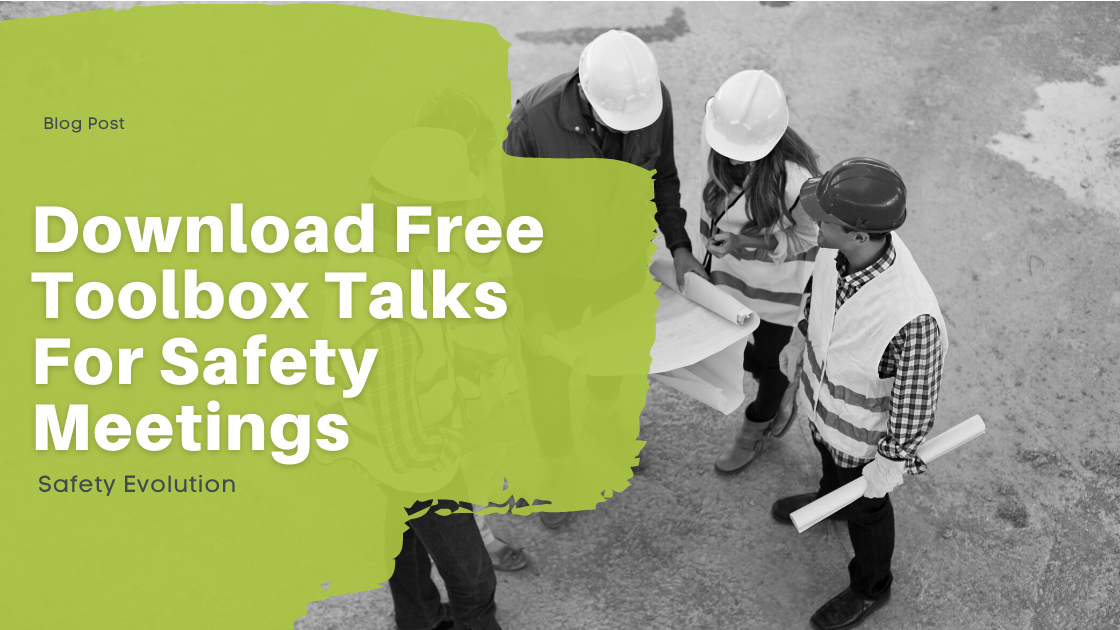
Safety doesn’t happen by accident — it’s built through consistent communication, awareness, and proactive planning. One of the most effective tools for reinforcing workplace safety is the toolbox talk: short, focused safety discussions held at the start of a shift or before high-risk tasks. But crafting these talks from scratch every week isn’t practical. That’s where a reliable toolbox talks download resource becomes essential for safety managers, foremen, and supervisors.
These downloadable talks save time, ensure regulatory alignment, and deliver consistent messaging across teams and sites. Whether you're in construction, manufacturing, logistics, or maintenance, having access to pre-written, customizable safety talks streamlines your workflow and strengthens your safety culture.
Below, we break down what to look for in quality toolbox talks, where to find dependable downloads, and how to use them effectively in real-world operations.
Why Use Downloadable Toolbox Talks?
Toolbox talks are more than routine check-ins — they’re critical touchpoints for hazard identification, policy reinforcement, and team alignment. But creating relevant, compliant, and engaging content weekly drains time and resources.
Downloadable toolbox talks solve this by offering:
- Time savings: No need to research or draft from scratch.
- Regulatory alignment: Many are built around OSHA, ANSI, or ISO standards.
- Consistency: Ensures all teams receive the same critical safety messaging.
- Customization: Most are in editable formats (Word, PDF) for site-specific tweaks.
- Scalability: Easily rolled out across multiple crews, shifts, or locations.
For example, a supervisor preparing for a roofing job can download a "Working at Heights" talk, review it, add site-specific fall protection procedures, and deliver it in under 10 minutes.
Without these resources, teams often default to generic or outdated safety reminders — or skip talks altogether — increasing risk exposure.
Key Features of High-Quality Toolbox Talks
Not all downloadable safety talks are created equal. Use these criteria to evaluate and select the best:
#### 1. Clarity and Brevity Effective talks are 5–10 minutes long. They avoid jargon and focus on one clear topic — like “Ladder Safety” or “Hazard Communication.”
#### 2. Actionable Content They include specific steps workers can take: “Inspect ladders before use,” “Maintain three points of contact,” “Report damaged rungs immediately.”
#### 3. Visual Support Top-tier talks include diagrams, icons, or photo references — especially helpful for multilingual crews or visual learners.
#### 4. Discussion Prompts The best downloads include 2–3 open-ended questions to spark engagement: “What near-misses have you seen with lifting equipment?”
#### 5. Sign-Off Sheet Many include a printable attendance sheet with space for signatures — crucial for audit trails and compliance documentation.
Avoid downloads that are text-heavy, lack structure, or use vague language like “be careful.” Real safety happens in specifics.
Where to Find Reliable Toolbox Talks Downloads
The internet is flooded with free and paid safety talk resources. But many contain outdated information, poor formatting, or legal disclaimers that limit use.
Below are five trusted sources offering high-quality, ready-to-use toolbox talks — most with free download options:
| Resource | Format | Topics Covered | Customizable | Notes |
|---|---|---|---|---|
| OSHA.gov | PDF, Text | General safety, construction, hazard-specific | Yes | Government-backed, fully compliant |
| SafetyInfo.com | Word, PDF | 100+ topics including PPE, confined space | Yes | Large free library, no sign-up |
| Creative Safety Supply | PDF, PPT | 5S, ergonomics, fire safety | Partial | Free with email signup |
| SafetyCulture (iAuditor) | Editable templates | Digital inspections + talks | Yes | Integrates with app, cloud-based |
| Trade Associations (e.g., ABC, AGC) | PDF, DOC | Industry-specific, updated regularly | Yes | Membership often required |
Pro Tip: Always verify the publication or update date. Safety standards evolve — a 2018 lockout/tagout talk may not reflect current best practices.
Common Mistakes When
Using Downloaded Safety Talks
Even with high-quality content, poor implementation undermines effectiveness. Watch for these pitfalls:
#### ❌ Reading Verbally Without Engagement Simply reading the talk defeats the purpose. Workers tune out. Instead, pause after key points: “Has anyone experienced a slip on wet concrete? How was it handled?”
#### ❌ Never Customizing the Content A generic “Electrical Safety” talk won’t address your site’s temporary power setup. Add specifics: “On this project, all extension cords must be raised off the ground using cable ramps.”
#### ❌ Skipping Sign-Offs No signature = no proof. Without documentation, you can’t prove training occurred during an OSHA audit.
#### ❌ Using the Same Topics Repeatedly Rotating topics keeps content fresh. Use a 52-week safety calendar to cover all critical areas annually.
#### ❌ Delegating to Inexperienced Staff A junior worker may rush through a fall protection talk without understanding anchor point requirements. Ensure the facilitator knows the subject.
How to Integrate Downloads Into Your Safety Workflow
A toolbox talk is only as strong as the process behind it. Use this workflow to maximize impact:
- Select the Topic Weekly
- Align with current tasks: excavation? Pull up a “Trenching Safety” talk.
- Download and Customize
- Insert site names, supervisor contact, and relevant procedures.
- Schedule the Meeting
- 5–10 minutes, start of shift, all crew present.
- Deliver with Interaction
- Read key points, then ask: “What would you do if you saw a frayed power cord?”
- Record Attendance
- Print or use a digital form. Store for at least one year.
- File and Follow Up
- Track recurring issues. If three talks mention trip hazards, schedule a site cleanup.
For example, a pipeline crew used downloaded “Hot Work Safety” talks weekly during welding phases. They added photos of their actual permit board and reviewed real near-misses. Incident reports dropped 40% over two months.
Top 5 Free Toolbox Talks You Can Download Today
Here are five high-impact, downloadable talks you can use immediately — all available in editable formats:
- Hand Tool Safety
- Covers inspection, proper use, and PPE. Ideal for maintenance crews.
- Slips, Trips, and Falls
- Focuses on housekeeping, lighting, and floor conditions. Critical for indoor and outdoor sites.
- PPE Awareness
- Details correct selection, maintenance, and limitations of gloves, goggles, and hard hats.
- Hazard Reporting
- Teaches workers how and when to report unsafe conditions — boosts proactive culture.
- Weather-Related Hazards
- Addresses heat stress, cold exposure, and lightning safety — perfect for seasonal shifts.
Most of these are available on OSHA.gov or SafetyInfo.com with no registration required.
Making the
Most of Digital Toolbox Talk Platforms
While PDFs and Word docs work, digital platforms like SafetyCulture, Procore, or SiteDocs take toolbox talks further. Benefits include:
- Automated Scheduling: Set recurring talks by crew or role.
- Mobile Access: Foremen deliver talks from tablets on-site.
- Photo Integration: Attach real images of hazards found.
- Analytics: Track completion rates, common issues, and trends.
- Cloud Storage: Instant access during audits.
For example, a solar installation company switched from paper talks to a digital system. Supervisors now download weekly topics, customize on their phones, and collect digital signatures. Safety compliance rose from 68% to 96% in six months.
Even if you stick with print, consider scanning completed sheets into a shared drive for backup.
Final Tips for Effective Safety Communication
A toolbox talk isn’t a checkbox — it’s a culture builder. To get real results:
- Rotate facilitators to develop leadership and engagement.
- Tie talks to real events — use a recent incident (without blame) as a learning moment.
- Keep archives organized by date and topic for quick retrieval.
- Solicit feedback — ask workers which topics were most useful.
The best safety programs don’t just download content — they adapt, reinforce, and act on it.
Take Action Now Don’t wait for an incident to improve your safety talks. Visit OSHA.gov or SafetyInfo.com, download a topic relevant to your current work, customize it with your crew’s details, and deliver it at your next shift start. One 10-minute talk could prevent a lifetime of injury.
Frequently Asked Questions
Where can I download free toolbox talks? OSHA.gov, SafetyInfo.com, and Creative Safety Supply offer free, downloadable safety talks in PDF and Word formats.
Are toolbox talk downloads OSHA compliant? Many are, especially those from government or reputable safety sites. Always verify content against current OSHA standards.
Can I edit downloaded safety talks? Yes — most are provided in editable formats so you can add site-specific details, procedures, or photos.
How often should toolbox talks be conducted? Weekly is standard, but increase frequency during high-risk tasks like excavation or hot work.
Do I need to keep records of toolbox talks? Yes — attendance sheets with signatures serve as legal proof of training during inspections or audits.
What topics should I cover in toolbox talks? Focus on current hazards: PPE, fall protection, electrical safety, hazardous materials, and equipment operation.
Can digital tools replace paper-based toolbox talks? Yes — platforms like SafetyCulture or Procore offer digital versions with added tracking, storage, and analytics.
FAQ
What should you look for in Free Toolbox Talks Download for Safer Workplaces? Focus on relevance, practical value, and how well the solution matches real user intent.
Is Free Toolbox Talks Download for Safer Workplaces suitable for beginners? That depends on the workflow, but a clear step-by-step approach usually makes it easier to start.
How do you compare options around Free Toolbox Talks Download for Safer Workplaces? Compare features, trust signals, limitations, pricing, and ease of implementation.
What mistakes should you avoid? Avoid generic choices, weak validation, and decisions based only on marketing claims.
What is the next best step? Shortlist the most relevant options, validate them quickly, and refine from real-world results.